
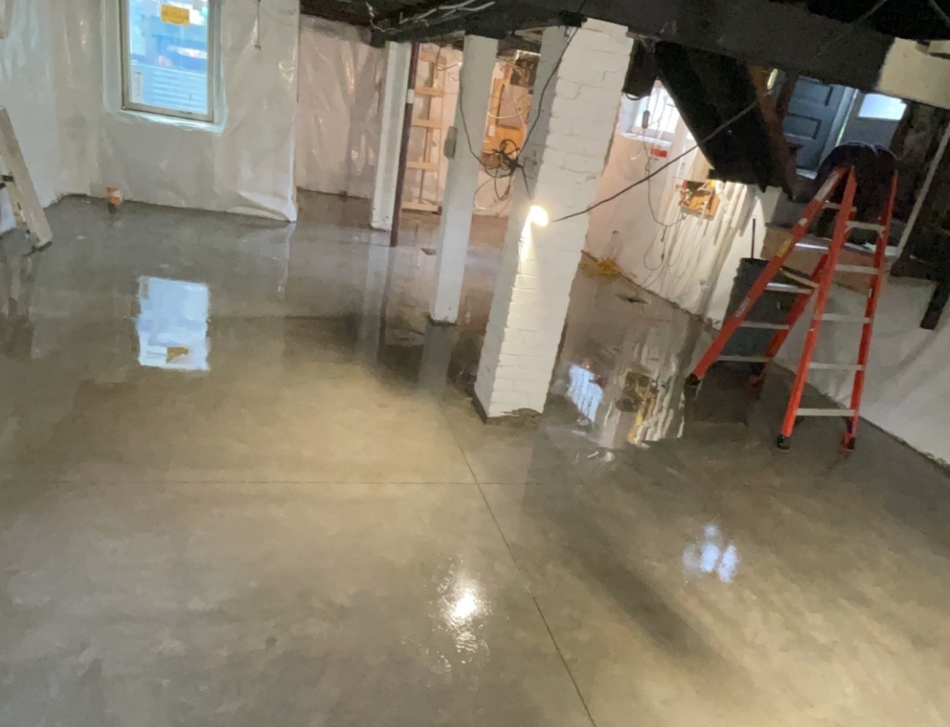
If you’ve asked three contractors to look at a wet basement, you may have gotten three very different numbers. That’s not unusual. Basement waterproofing isn’t a single product with a set price. It’s a solution built around where the water is coming from, how much of it there is, and what your home needs to stay dry for the long term.
At Dry Basement® Foundation Repair, we’ve been solving water problems in Midwest basements since 1975. Here’s what actually drives the cost of a waterproofing project, so you can compare quotes with confidence and know what you’re paying for.
The first factor is simple: how much of your basement is affected. A single damp corner after a heavy rain is a different project than water seeping along every wall or pooling across the floor.
Scope also depends on the source. Water can enter through wall cracks, the joint where the wall meets the floor, window wells, or up through the slab itself. Each entry point needs to be addressed, and a system that only treats one of them won’t hold up for long.
That’s why a thorough inspection matters. A good contractor will trace the water back to its source before recommending anything, rather than quoting a fix based on what’s visible.
Most lasting waterproofing solutions come down to drainage. Instead of trying to block water with coatings alone, an interior drainage system captures water as it enters and directs it to a sump pit, where it can be pumped out of the house.
The cost of drainage depends on how many linear feet of perimeter need to be covered, what’s under your floor, and whether the slab has to be opened up to install it. Our No Water System® is one example of this approach, built to collect water along the foundation and keep it from reaching your living space.
Outside the house, drainage matters too. Downspouts that dump water against the foundation, negative grading, or a yard that holds water after storms can all make a basement problem worse. Sometimes the right plan includes exterior drainage work, and that adds to the scope.

How easy it is to get to the work area has a real impact on labor. A wide-open, unfinished basement is the simplest situation. A finished basement with drywall, flooring, built-in shelving, or a bathroom may require removing and replacing materials to install a system properly.
Accessibility outside the home matters as well. Decks, patios, landscaping, and tight spaces between houses can make exterior work more involved. Older homes in established neighborhoods across Wichita, Columbia, and the Kansas City metro sometimes come with these challenges.
A drainage system is only as reliable as the pump at the end of it. The type of sump system you need affects cost, and it’s one area where cutting corners can backfire.
A basic single pump may handle light water, but homes that see steady seepage or heavy spring storms often need more protection. Questions that shape this part of the project include:
Our Dual Pump Pack® Sump Pump System pairs a primary pump with a backup for exactly this reason. In places like Des Moines and Kansas City, where storms can drop a lot of rain in a short time, redundancy is worth considering.

Water and foundation problems often show up together. If an inspection finds cracked or bowing walls, those issues may need to be repaired before or alongside waterproofing. Sealing a crack without addressing the movement that caused it usually leads to the same problem coming back.
Other common add-ons include window well drainage, wall vapor barriers, dehumidification, and mold treatment if moisture has been present for a while. Midwest freeze-thaw cycles put steady pressure on foundation walls year after year, so it’s common to find more than one issue during an inspection.
A trustworthy contractor will separate what you need now from what can wait, and explain why.
Quotes differ based on the system being proposed, how much of the basement is covered, and whether the contractor is treating the source of the water or just the symptoms. Ask each company to explain what’s included and what’s causing the problem.
It depends on the home. Exterior work often involves excavation, while interior systems may require opening the floor. Our guide to interior vs. exterior basement waterproofing breaks down the differences.
Yes. Finished spaces may require some materials to be removed and replaced, which affects the scope, but a properly designed system can protect a finished basement.
Coverage varies by contractor. Dry Basement® backs its systems with lifetime transferable warranties, so the protection stays with the home if you sell.
The cost of basement waterproofing comes down to the size of the problem, the system that fits your home, and what it takes to install it the right way. The best way to get a clear answer is a professional inspection.
Dry Basement® offers free inspections for homeowners in Missouri, Kansas, and Iowa. Our team will explain what’s causing the water, walk you through your options, and give you a plan built to last. Schedule your free inspection today.
Since 1975 Dry Basement® has protected homes across Missouri, Kansas, and Iowa from foundation movement, water intrusion, and structural damage.
Family-owned since 1975. Honest assessments, engineered systems, and lifetime transferable warranties on qualified work.
Family-owned since 1975. Honest assessments, engineered systems, and lifetime transferable warranties on qualified work.
Expert advice on waterproofing, foundation repair, crawl spaces, and mold, written for Midwest homeowners.
Expert advice on waterproofing, foundation repair, crawl spaces, and mold, written for Midwest homeowners.
Build a career with a Midwest company that has protected homes since 1975. Competitive pay, year-round work, and room to grow.
Every home is different. We design customized, engineered systems that deliver a permanent fix. Our certified crews protect your home for the long term.
Not sure what you are looking at? These are the questions Midwest homeowners ask us most, answered by our inspectors: what causes each problem, how serious it is, and how we fix it.