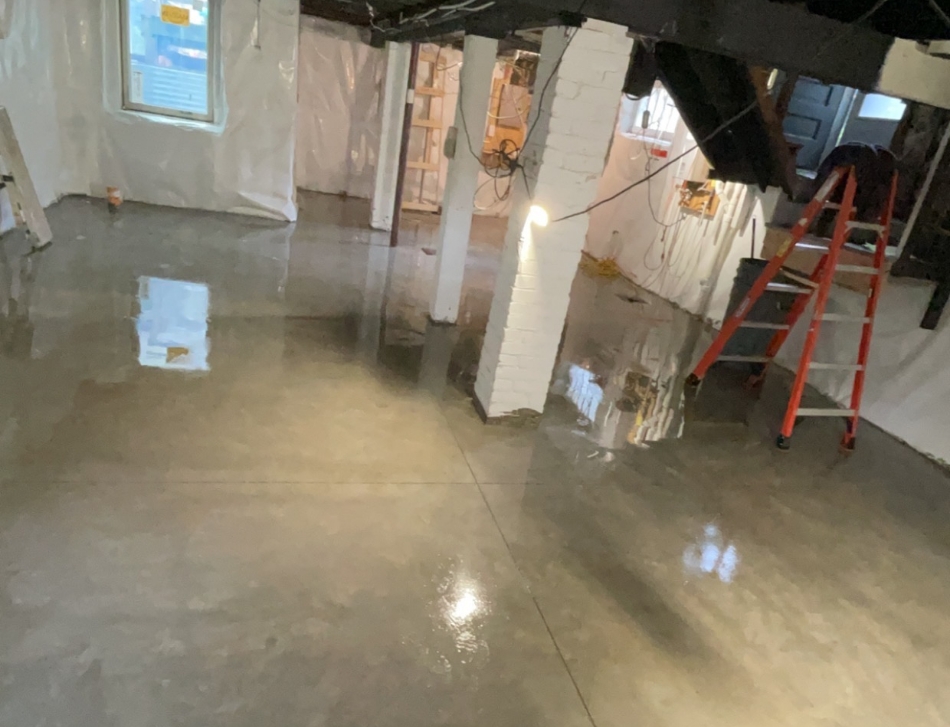
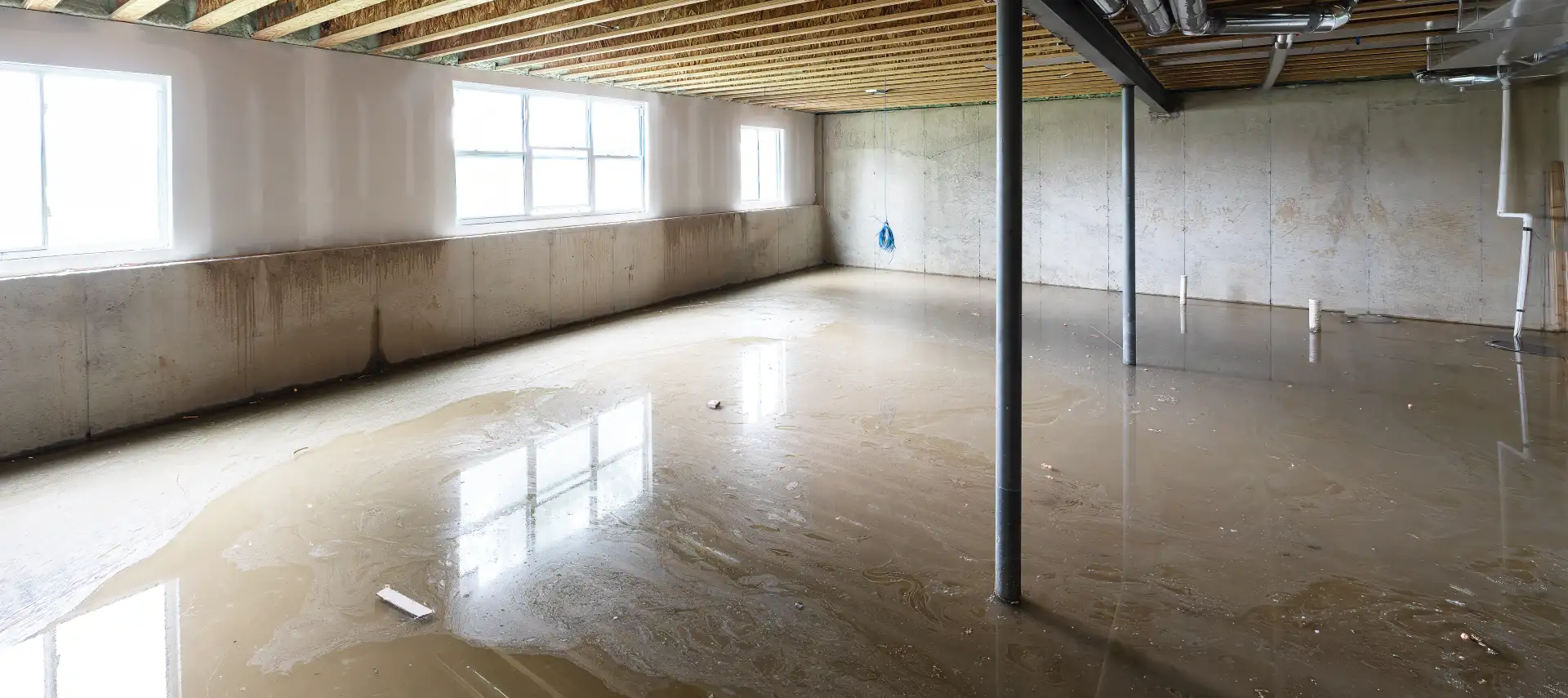
If water is getting into your basement, you’ve probably seen both interior and exterior waterproofing mentioned as solutions. They both work, but they solve the problem in different ways and are suited to different situations.
For homeowners across Missouri, Kansas, and Iowa, basement water is rarely a one-time event. Clay soils, spring storms, and freeze-thaw cycles create ongoing pressure against foundation walls. The right basement waterproofing approach depends on how water is getting in, where it’s coming from, and what your home’s foundation looks like today.
Here’s how each method works and how to figure out which one fits your situation.
Interior waterproofing manages water after it reaches the inside of your foundation. Rather than trying to block water from the outside, it collects and removes it before it causes damage.
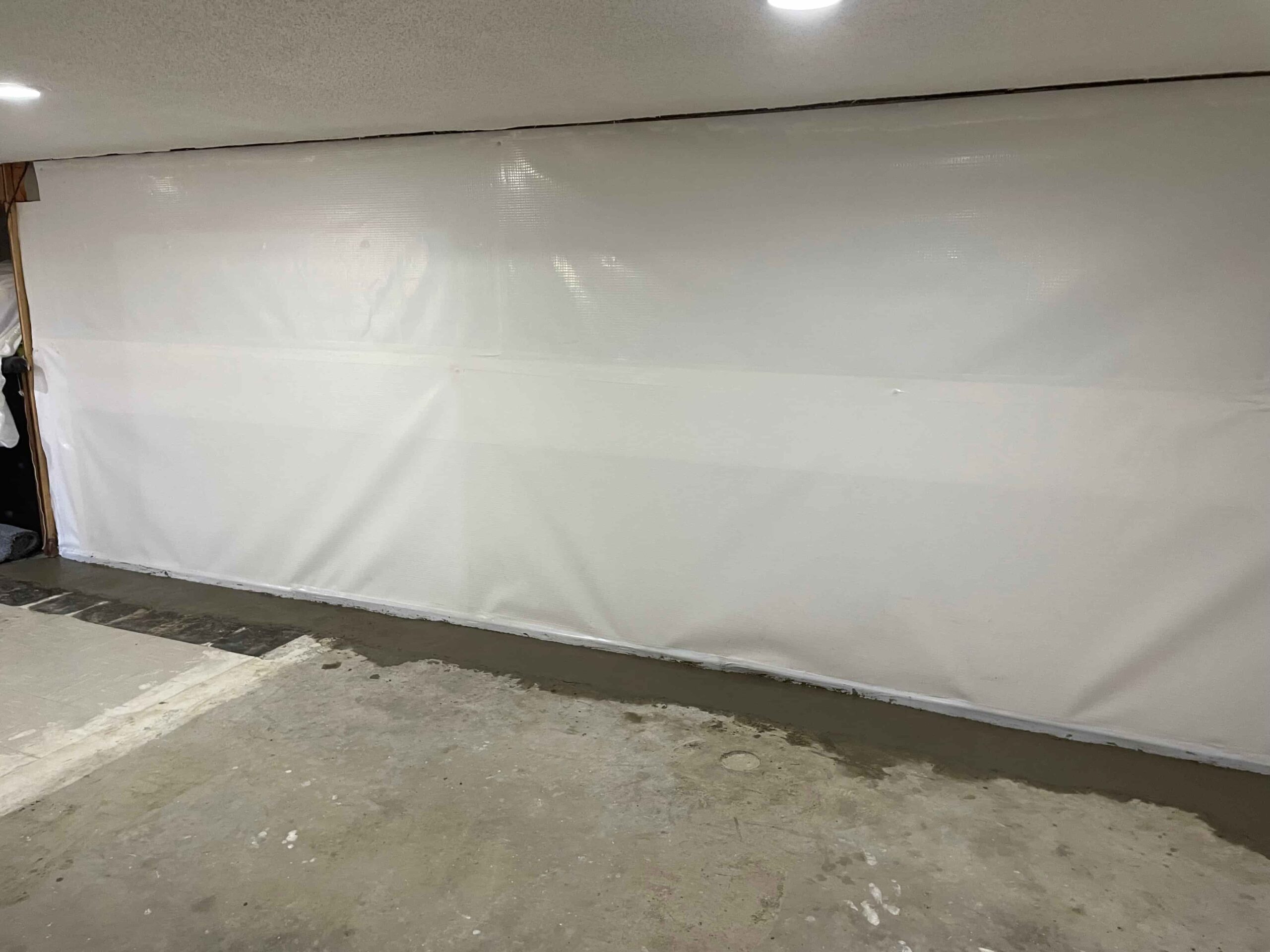
A typical interior system includes a perimeter drainage channel installed along the base of the wall, a sump pump to discharge collected water away from the home, and in many cases, a wall vapor barrier to guide moisture into the drainage path. Some systems also include dehumidification to control humidity after the active water is handled.
Interior waterproofing is often the most practical choice for existing homes because it doesn’t require digging up landscaping, driveways, or porches. It’s effective for hydrostatic pressure, cove joint seepage, and wall condensation, which are all common in Midwest basements. Installation is typically completed in one to three days with minimal disruption.
Exterior waterproofing stops water before it reaches your foundation wall. It addresses the problem at the source by creating a barrier and drainage path on the outside of the structure.
The process involves excavating soil down to the foundation footing, applying a waterproof membrane or coating to the exterior wall, installing a drainage board to route water downward, and placing a French drain at the footing level to carry water away. Proper backfill and grading complete the system.
Because it requires excavation, exterior waterproofing is more invasive and typically costs more than interior solutions. It’s most common during new construction or when the exterior wall surface is already exposed for another repair. For older homes with mature landscaping, decks, or limited access, it can be more complex to execute.
The right approach depends on your specific situation. Here are the main factors:
Yes. Some homes, especially older properties in Kansas City, Wichita, Des Moines, and Columbia, benefit from a combined approach. For example, exterior grading and downspout corrections paired with an interior drainage and sump system can address both surface runoff and groundwater pressure at the same time.
The key is not to guess. A proper inspection identifies where the water is coming from and whether one method or a combination makes the most sense for your foundation and soil conditions.
Exterior waterproofing typically costs more because it involves excavation, membrane application, drainage installation, and landscape restoration. Interior systems are generally more affordable and faster to install for most existing homes.
Both can provide long-term protection when properly installed. Interior drainage systems with quality sump pumps and maintained components last for many years. Exterior membranes are designed to protect the wall for decades, though access for future maintenance is more difficult.
Yes. Interior waterproofing systems are installed from inside the basement without digging up your yard. This is why interior systems are the most common solution for homes that are already built and occupied.
A dry basement is a strong selling point. Waterproofing protects the structure, prevents mold, and makes the space usable, all of which support property value and buyer confidence.
Since 1975, Dry Basement® Foundation Repair has helped homeowners across Missouri, Kansas, and Iowa stop basement water with solutions matched to the actual cause. Our inspection evaluates water entry points, drainage conditions, wall integrity, and soil behavior before we recommend anything. We don’t default to one approach for every home because every home is different.
Whether the right fix is an interior drainage system, exterior corrections, or a combination, you’ll get a clear explanation of why it’s recommended and how it protects your home long-term. Schedule a free inspection and find out exactly what your basement needs.
The best waterproofing solution is the one that matches your home, your water problem, and your foundation. Skip the guesswork and get a professional opinion. Schedule a free inspection with Dry Basement® and we’ll show you exactly where water is getting in and the most effective way to stop it.
Since 1975 Dry Basement® has protected homes across Missouri, Kansas, and Iowa from foundation movement, water intrusion, and structural damage.
Family-owned since 1975. Honest assessments, engineered systems, and lifetime transferable warranties on qualified work.
Family-owned since 1975. Honest assessments, engineered systems, and lifetime transferable warranties on qualified work.
Expert advice on waterproofing, foundation repair, crawl spaces, and mold, written for Midwest homeowners.
Expert advice on waterproofing, foundation repair, crawl spaces, and mold, written for Midwest homeowners.
Build a career with a Midwest company that has protected homes since 1975. Competitive pay, year-round work, and room to grow.
Every home is different. We design customized, engineered systems that deliver a permanent fix. Our certified crews protect your home for the long term.
Not sure what you are looking at? These are the questions Midwest homeowners ask us most, answered by our inspectors: what causes each problem, how serious it is, and how we fix it.