When foundation damage gets serious, homeowners want a straight answer: can this be repaired, or does it need to be replaced? It’s a fair question, and the answer matters because the two paths differ significantly in scope, cost, and disruption.
For most homes across Missouri, Kansas, and Iowa, targeted foundation repair is enough to stabilize the structure and stop further movement. But in some cases, a wall has deteriorated or shifted to the point where repair alone won’t hold. That’s when partial or full replacement enters the conversation.
The key is knowing which situation you’re actually in, and that requires an on-site inspection. Here’s how the decision works.
Foundation work isn’t all-or-nothing. There’s a full spectrum of solutions between sealing a hairline crack and rebuilding an entire wall. Understanding where your problem falls on that spectrum helps you make sense of what a contractor recommends.
On the lighter end, you have crack sealing and minor reinforcement. In the middle, there’s stabilization work like piering for settlement, anchoring or bracing for bowing walls, and support systems for sagging floors. On the more invasive end, there’s partial wall replacement (removing and rebuilding a damaged section) and full wall replacement or rebuild.
Most foundation problems in Kansas City, Wichita, Des Moines, and surrounding areas fall somewhere in the middle. The goal is always to use the least invasive solution that fully addresses the problem and holds up long-term.
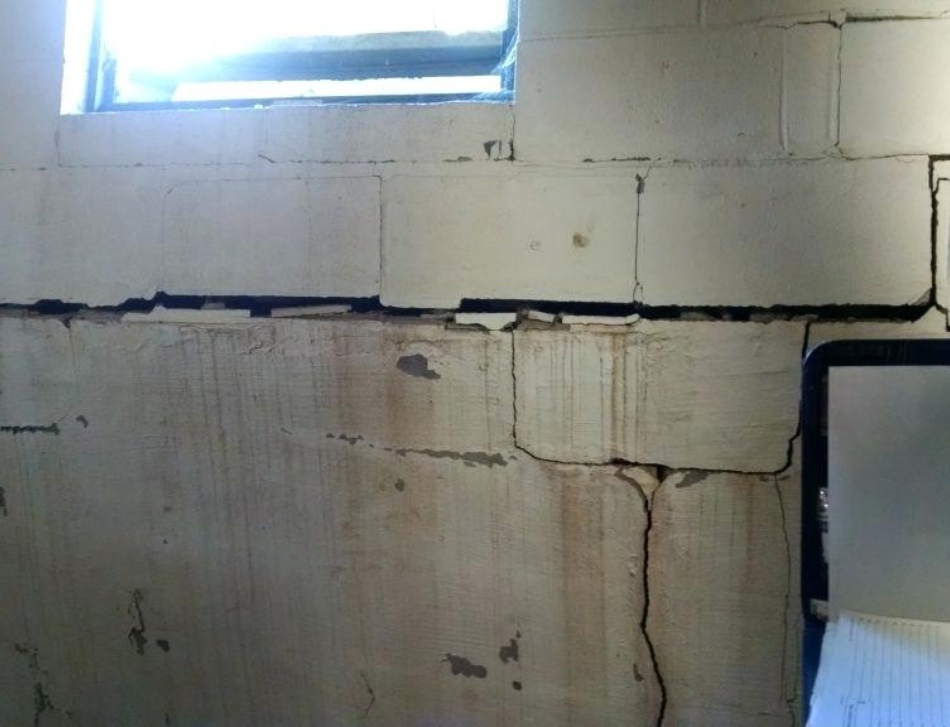
Foundation repair works when the structure can be stabilized, reinforced, or corrected without removing wall sections. That covers a wide range of problems.
Settlement is one of the most common. When a foundation sinks or shifts due to soil movement, pier systems can stabilize and in some cases lift the structure back toward level. For walls that bow or lean inward from lateral soil pressure, anchor systems or bracing can counteract the force and prevent further movement. Cracks that haven’t compromised the wall’s overall integrity can be sealed and monitored. And floors that sag due to failing supports below can be restored with engineered support systems.
Repair is designed to stop what’s happening, restore stability, and protect against future movement, all without the cost and disruption of tearing out and rebuilding sections of your foundation.
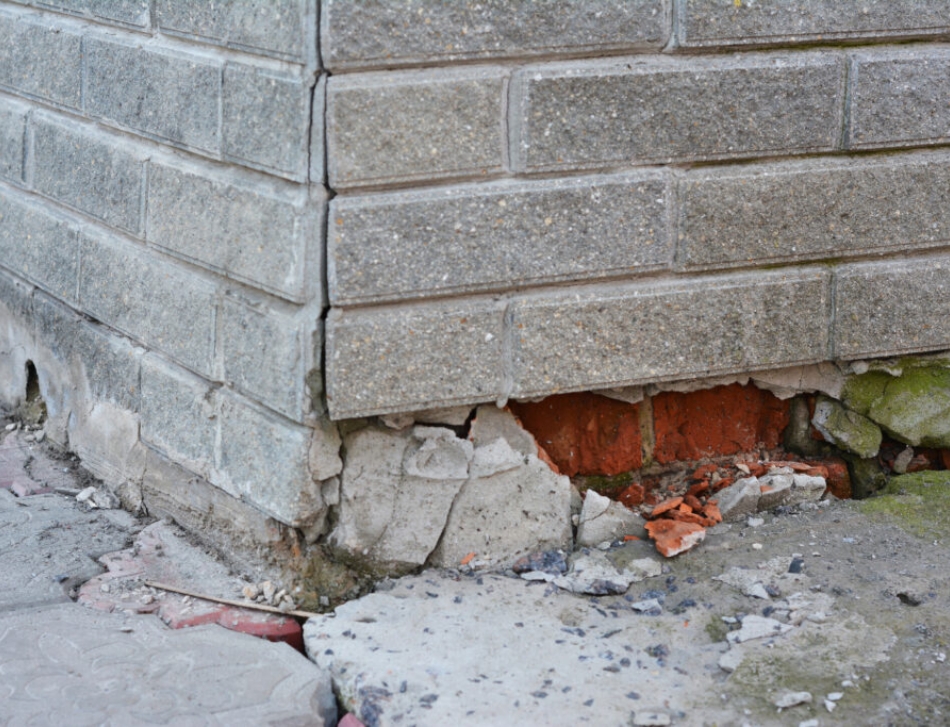
Replacement becomes the conversation when repair is no longer structurally feasible. That’s not a common situation, but it does happen.
If a wall has deteriorated to the point where the material itself is failing (crumbling block, severely corroded rebar, disintegrating mortar throughout), bracing or anchoring may not have enough sound material to attach to. If a wall has shifted so far inward that it cannot be corrected back to a safe position, removal and rebuilding may be the only path to a stable structure. And if previous repairs have been attempted and failed repeatedly, it often signals that the wall itself is beyond salvage.
Replacement means excavating, removing the damaged wall section, and constructing a new one in its place. It’s more invasive, takes longer, and costs more, but when the wall can’t be saved, it’s the right call. Service availability for full replacement may vary by market, so an inspection confirms both what’s needed and what can be delivered in your area.
Several factors go into the recommendation:
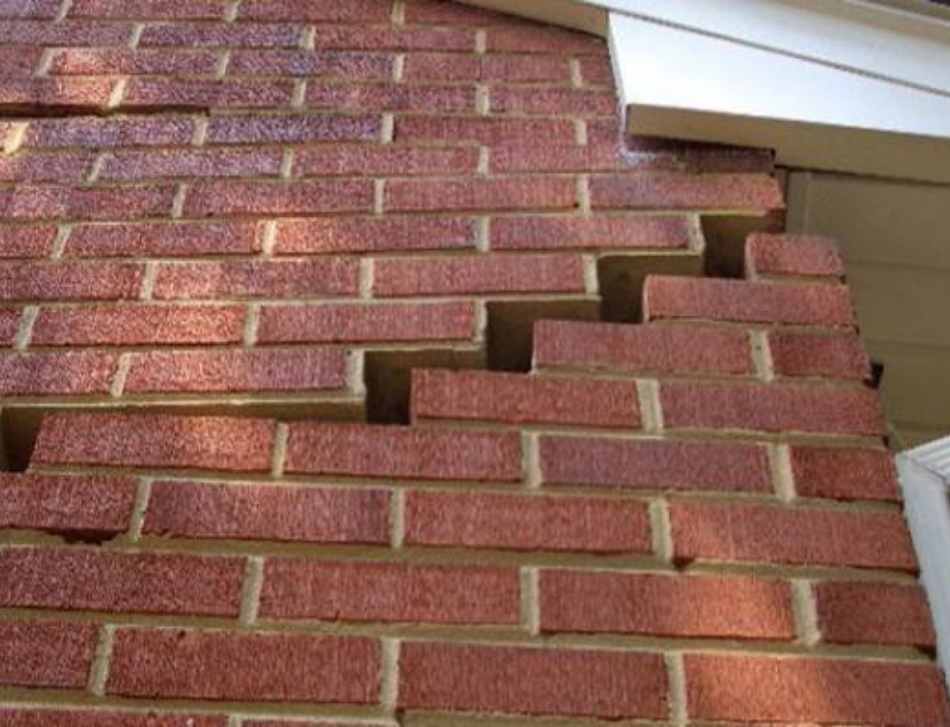
No one can determine repair versus replacement from a photo, a phone call, or a description. The decision requires physically measuring wall deflection, evaluating material condition, assessing soil and drainage, and understanding the full scope of what has happened over time.
An inspection protects you from paying for work you don’t need, and from under-treating a problem that requires more attention. It’s the only responsible way to arrive at a recommendation.
Yes, generally. Replacement involves excavation, demolition, new construction, and restoration, which adds labor, materials, and time. Repair is typically less invasive and less costly. The right choice is based on what the wall actually needs, not cost alone.
It depends on the situation. If a repair was done correctly and conditions change (new drainage problems, additional soil movement), supplemental work may be appropriate. If the same repair keeps failing, it usually means the wall needs a different approach or may not be salvageable through repair alone.
Signs that point toward replacement include severe inward displacement that can’t be corrected, crumbling or disintegrating wall material, widespread structural failure across the wall, and repeated failed repairs. An inspection will confirm whether the wall can be saved or needs to come out.
Yes. Dry Basement® Foundation Repair provides foundation stabilization, wall bracing, piering, crack repair, wall repair, and wall replacement services. The recommendation is always based on what the inspection reveals about your specific home and conditions.
The difference between repair and replacement isn’t something to guess at. An inspection gives you a clear, honest answer based on what’s actually happening with your foundation, your walls, and your soil.
Schedule a free foundation inspection with Dry Basement® Foundation Repair. We serve homeowners across Missouri, Kansas, and Iowa, including Kansas City, Wichita, Des Moines, and Columbia.
Since 1975 Dry Basement® has protected homes across Missouri, Kansas, and Iowa from foundation movement, water intrusion, and structural damage.
Family-owned since 1975. Honest assessments, engineered systems, and lifetime transferable warranties on qualified work.
Family-owned since 1975. Honest assessments, engineered systems, and lifetime transferable warranties on qualified work.
Expert advice on waterproofing, foundation repair, crawl spaces, and mold, written for Midwest homeowners.
Expert advice on waterproofing, foundation repair, crawl spaces, and mold, written for Midwest homeowners.
Build a career with a Midwest company that has protected homes since 1975. Competitive pay, year-round work, and room to grow.
Every home is different. We design customized, engineered systems that deliver a permanent fix. Our certified crews protect your home for the long term.
Not sure what you are looking at? These are the questions Midwest homeowners ask us most, answered by our inspectors: what causes each problem, how serious it is, and how we fix it.