Basement wall cracks are among the most common warning signs homeowners notice, and among the most misunderstood. Some cracks are minor cosmetic issues caused by normal settling. Others are signs of serious structural movement that can lead to bowing walls, water intrusion, and expensive foundation damage if ignored.
For homeowners in Missouri, Kansas, and Iowa, understanding the difference matters. Midwest homes constantly deal with expansive clay soils, heavy rainfall, and freeze-thaw cycles that place pressure on basement walls year after year.
In this guide, we’ll explain how to identify cosmetic vs. structural wall cracks, the warning signs to watch for, and when it’s time to schedule a professional inspection for basement wall crack repair.
Not every crack means your foundation is failing. Some small cracks develop naturally as concrete cures or homes settle over time. These are often considered cosmetic cracks.
Structural wall cracks are different. They indicate movement, pressure, or instability affecting your foundation walls. These cracks usually worsen over time and may lead to bowing basement walls, water leaks, or wall failure if not addressed.
The key is understanding the crack’s size, shape, direction, and behavior.
Cosmetic cracks are usually small, stable, and not connected to structural movement.
Small vertical cracks less than 1/8 inch wide are often caused by normal concrete shrinkage during curing.
If the wall remains straight without bulging, leaning, or inward movement, the crack may be non-structural.
Minor cosmetic cracks often remain dry and do not allow moisture into the basement.
If a crack has stayed the same size for years, it may simply be a harmless settlement crack. Even cosmetic cracks should still be monitored, especially in Midwest homes where soil movement can accelerate over time.
Several factors contribute to basement wall movement throughout the Midwest.
Clay-heavy soil absorbs water during wet seasons and expands dramatically. As it dries, it contracts. This repeated movement places constant pressure on foundation walls.
After heavy rainfall, groundwater builds around the home. This creates hydrostatic pressure that pushes inward against basement walls.
Clogged gutters, short downspouts, or improper grading allow water to collect around the foundation.
Midwest winters repeatedly freeze and thaw surrounding soil, increasing stress on basement walls over time.
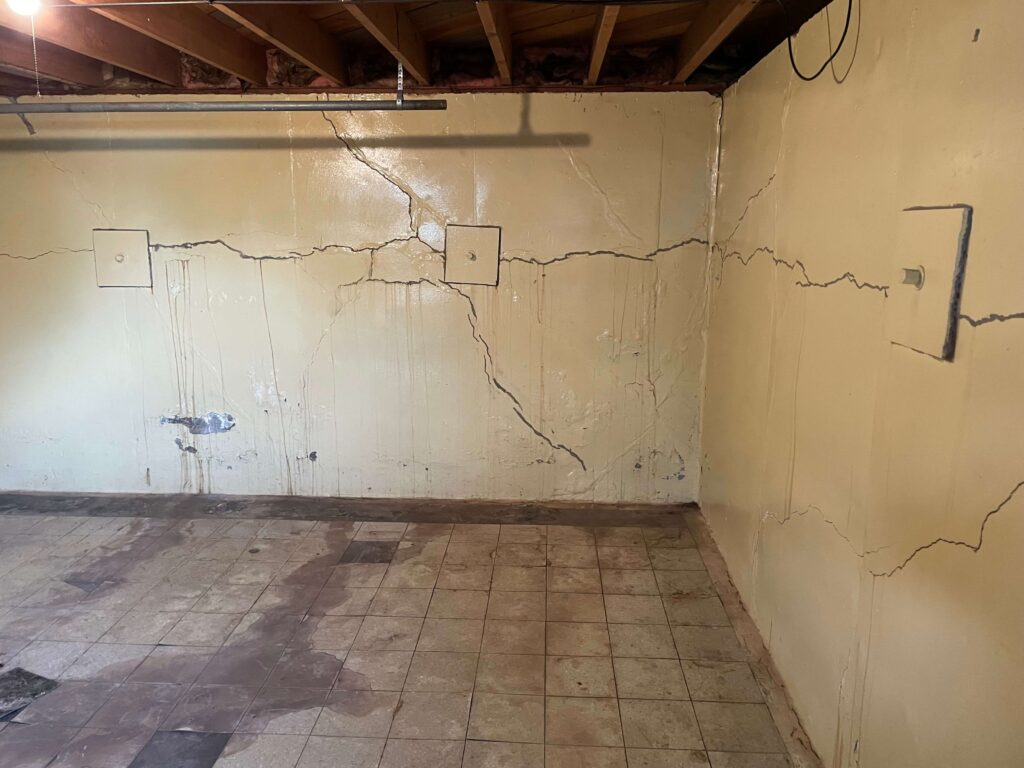
Structural wall cracks are often larger, more aggressive, and tied to pressure against the foundation wall.
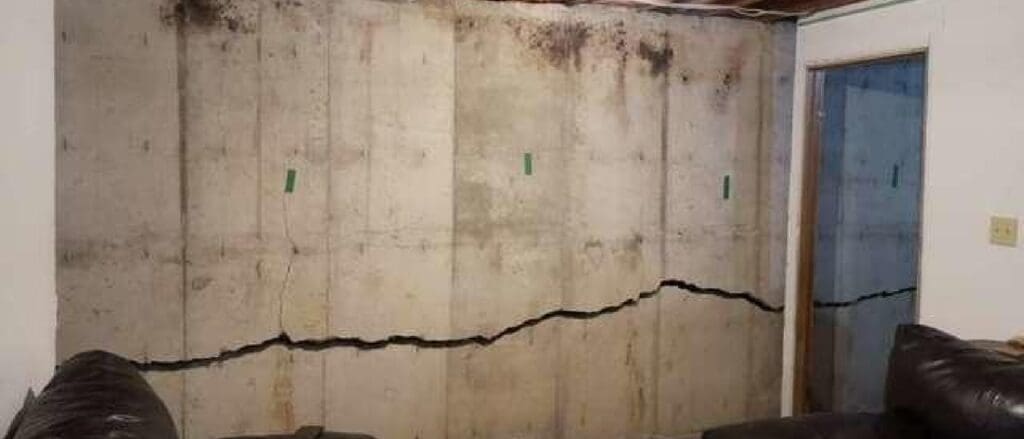
Horizontal wall cracks are one of the clearest signs of structural pressure.
These cracks often develop when saturated soil outside the home pushes inward against basement walls. Over time, hydrostatic pressure causes the wall to bend, crack, and weaken.
Horizontal cracks commonly appear:
If left untreated, horizontal wall cracks can eventually lead to bowing or collapse.
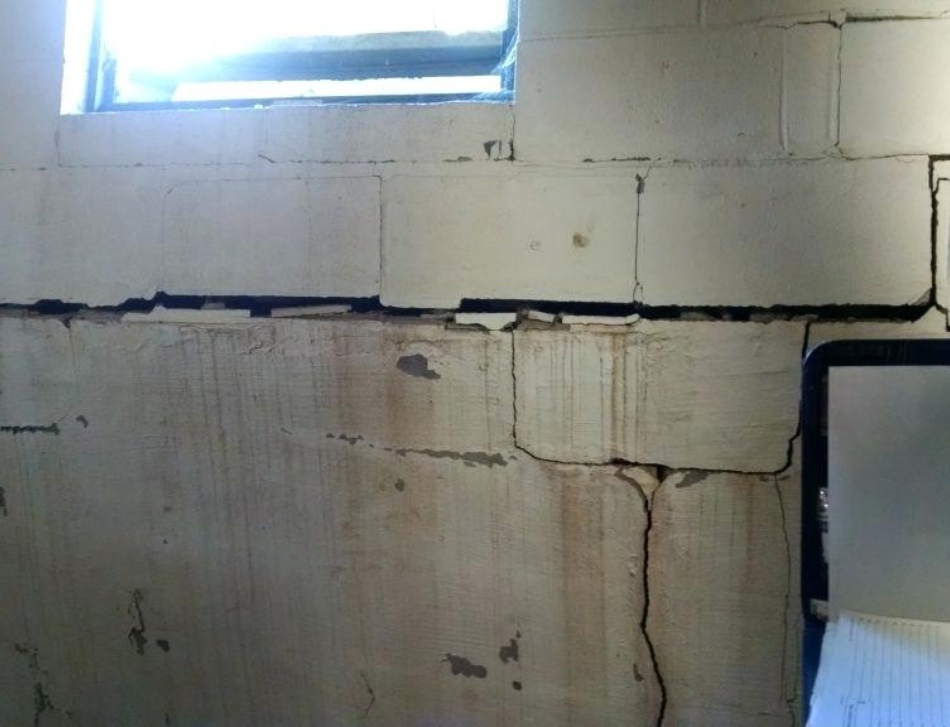
Stair step foundation cracks usually appear in block or brick walls and follow the mortar joints in a stair-step pattern.
These cracks often indicate:
Foundation settlement
Soil movement
Uneven structural pressure
Stair step cracks that widen over time or appear alongside wall movement should be inspected immediately.
A bowing basement wall is a major structural warning sign.
You may notice:
Walls curving inward
Bulging sections
Leaning walls
Gaps forming near floor joists or ceilings
Bowing walls are typically caused by excessive exterior soil pressure and are often accompanied by structural wall cracks.
Water intrusion is another major indicator that a crack may be structural.
When water enters through basement wall cracks, it often means:
Exterior drainage pressure is building
The wall is shifting
Waterproofing systems may be failing
Ignoring these leaks can lead to:
Mold and mildew growth
Damaged drywall or flooring
Higher basement humidity
Structural deterioration
Large cracks are usually a sign of ongoing movement.
If a crack is:
Expanding
Wider at one end
Allowing moisture inside
Paired with wall displacement
…it’s time for a professional inspection.
Several factors contribute to basement wall movement throughout the Midwest.
Clay-heavy soil absorbs water during wet seasons and expands dramatically. As it dries, it contracts. This repeated movement places constant pressure on foundation walls.
After heavy rainfall, groundwater builds around the home. This creates hydrostatic pressure that pushes inward against basement walls.
Clogged gutters, short downspouts, or improper grading allow water to collect around the foundation.
Midwest winters repeatedly freeze and thaw surrounding soil, increasing stress on basement walls over time.
The right basement wall crack repair solution depends on the severity of the damage and the amount of movement occurring.
Carbon fiber straps help stabilize walls showing early signs of inward movement.
Best for:
Wall anchors help pull walls back toward their original position using stable soil outside the home.
Best for:
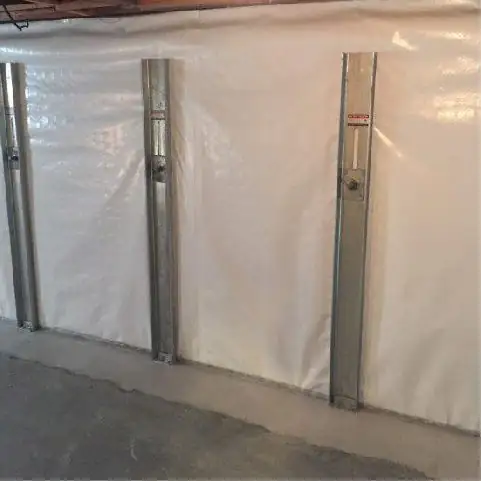
Steel beams provide strong vertical reinforcement for leaning or cracked walls.
Best for:
In many cases, waterproofing and drainage improvements are necessary to reduce hydrostatic pressure and prevent future damage.
This may include:
You should schedule an inspection if you notice:
The earlier structural issues are identified, the easier and more affordable repairs usually become.
Structural wall cracks rarely improve on their own. Small warning signs can quickly turn into major structural repairs if pressure continues building behind the wall.
At Dry Basement®, we’ve helped homeowners throughout Missouri, Kansas, and Iowa since 1975 with trusted foundation repair, wall stabilization, and basement waterproofing solutions.
Our team provides:
If you’ve noticed basement wall movement or cracking, contact Dry Basement® today to schedule your free inspection.
Yes. Horizontal wall cracks are often caused by hydrostatic pressure and structural movement. They should always be professionally inspected.
Yes. Many stair step cracks can be stabilized using wall anchors, reinforcement systems, or foundation repair solutions depending on severity.
No. Some cracks are cosmetic settlement cracks. However, widening cracks, horizontal cracks, or cracks paired with movement are usually structural.
Bowing walls are typically caused by soil pressure, water buildup, and expanding clay soils pushing inward against the foundation.
Costs vary depending on the extent of wall movement and the repair method required. Early repairs are typically less expensive than waiting for severe damage.