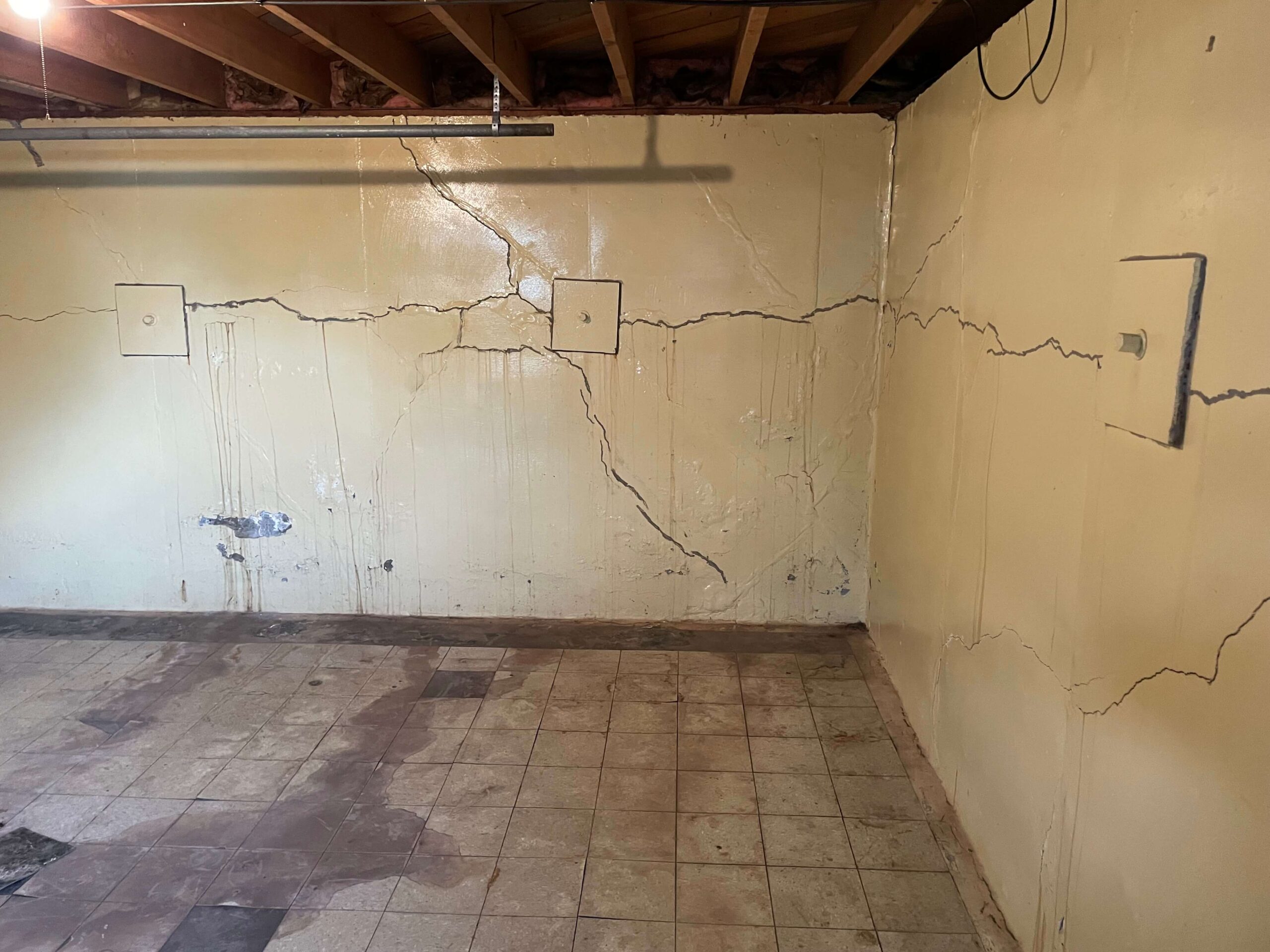
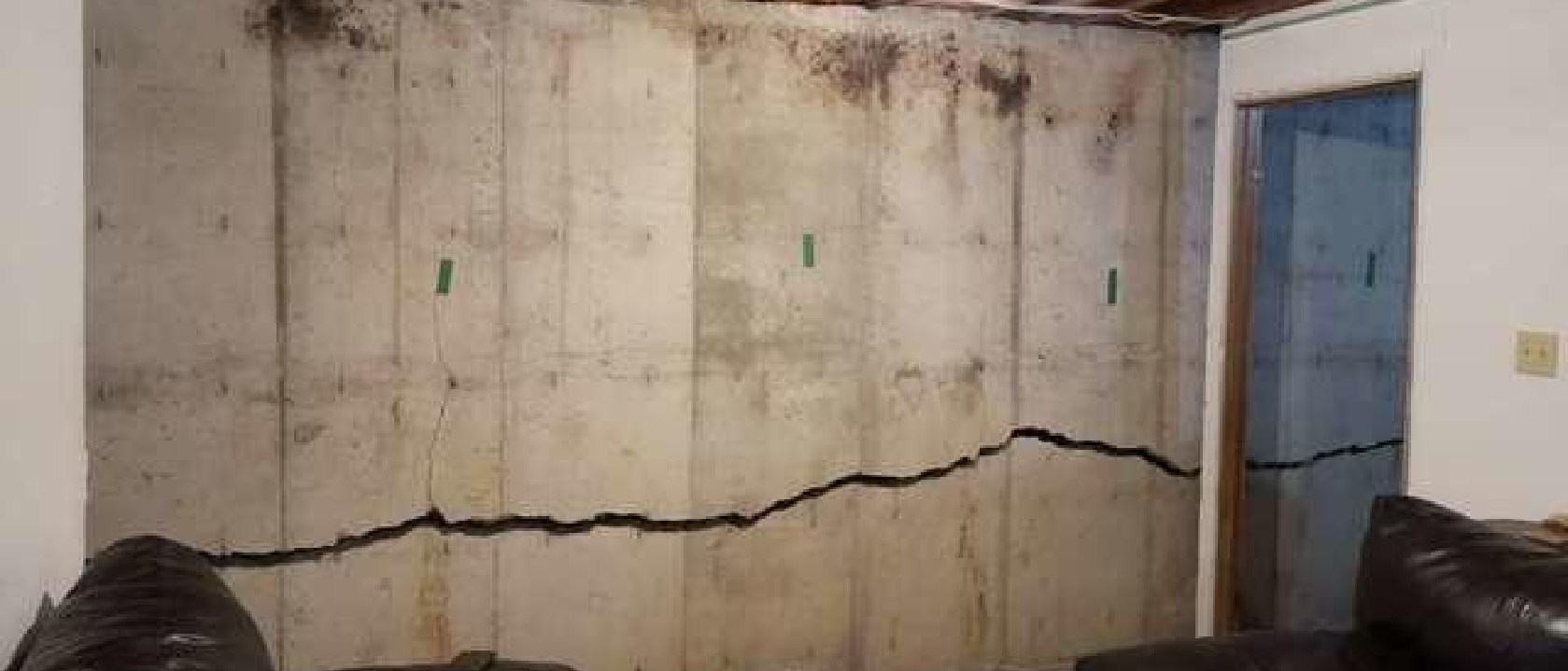
Horizontal cracks running along the length of your basement wall are a red flag. These often signal that soil pressure is pushing against the wall from the outside, especially after heavy spring rains or when clay soils expand. Left unchecked, these cracks can widen and lead to bowing or even collapse.
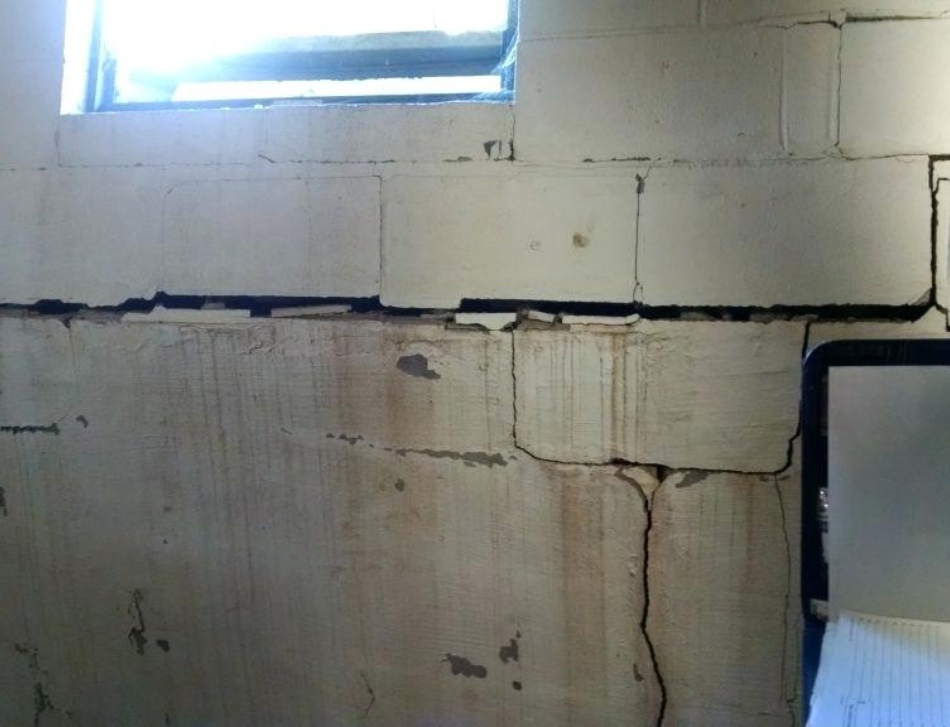
If you see cracks that zigzag in a stair-step pattern through the mortar joints of a block wall, pay attention. Stair-step cracks usually means the wall is moving or settling unevenly. This is often due to shifting soil or water pressure. Stair-step cracks are a classic sign of foundation movement in Midwest homes.
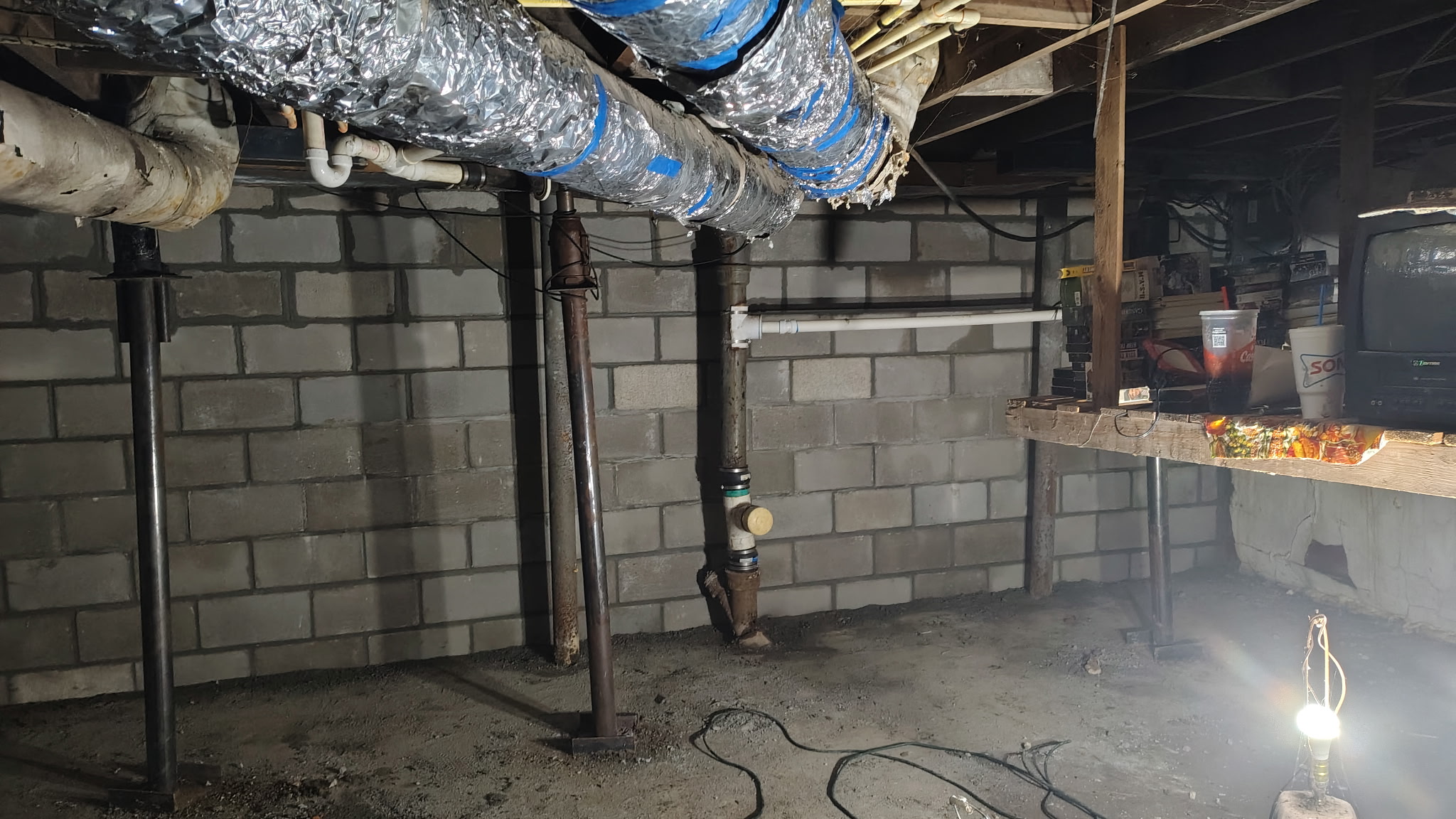
Walls that curve inward or bulge are under stress from outside forces, like saturated soil or poor drainage. Even a slight bow can be a sign of trouble. Over time, bowing walls lose their ability to support your home and may eventually fail if not reinforced or replaced.
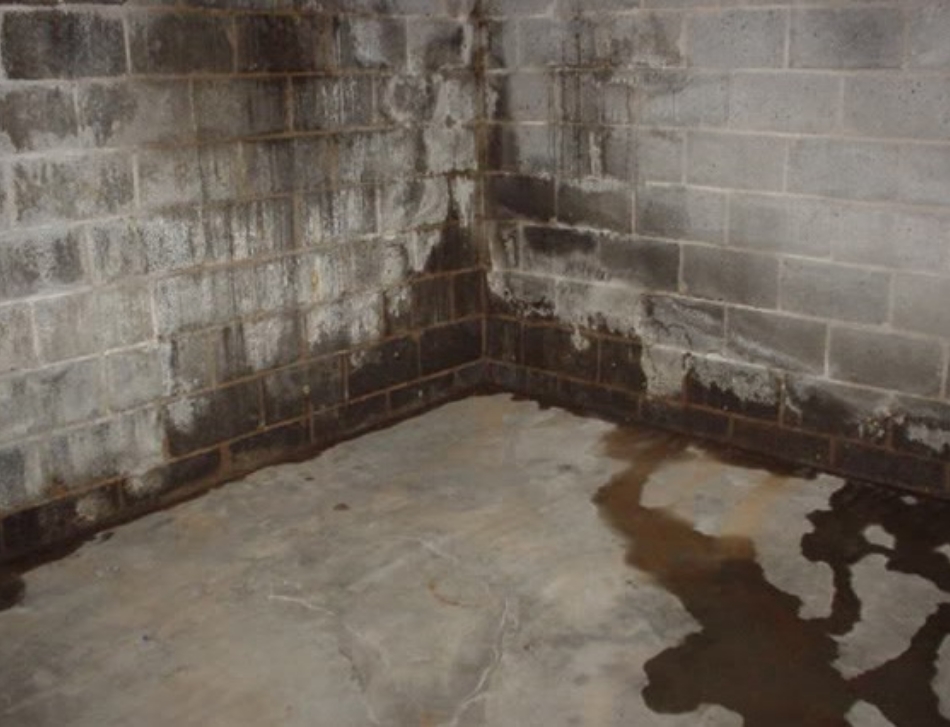
Moisture on your basement walls, whether it’s a trickle, a damp patch, or visible water after storms, means water is finding its way through cracks or porous concrete. Persistent dampness can weaken the wall, promote mold growth, and signal that the structure is compromised.
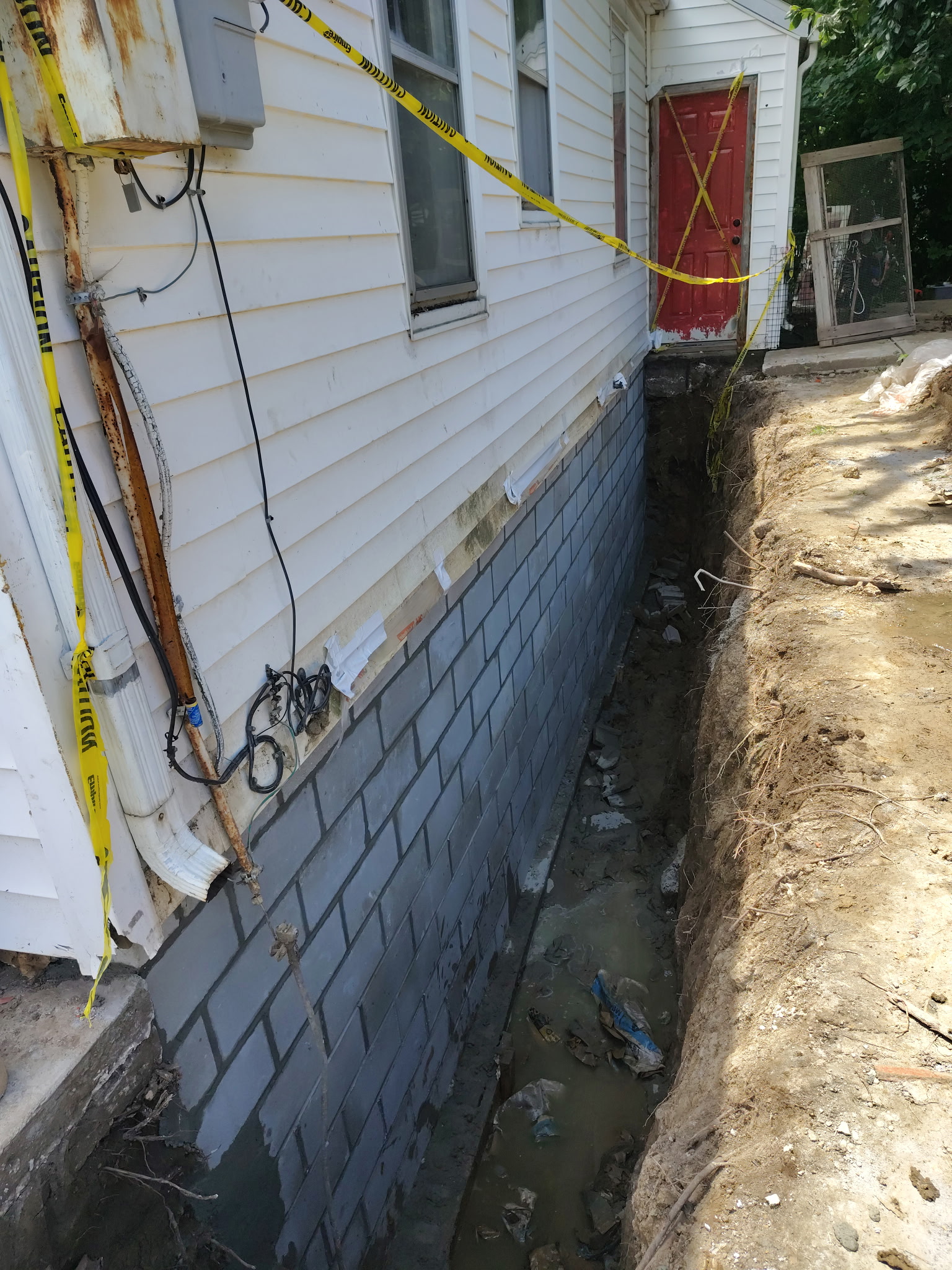
If you notice your basement wall leaning inward or pulling away from the floor or ceiling, act fast. This is a sign that the wall’s structural integrity is failing, often due to years of pressure or previous repairs that didn’t address the root cause. Gaps at the top or bottom of the wall are especially concerning.
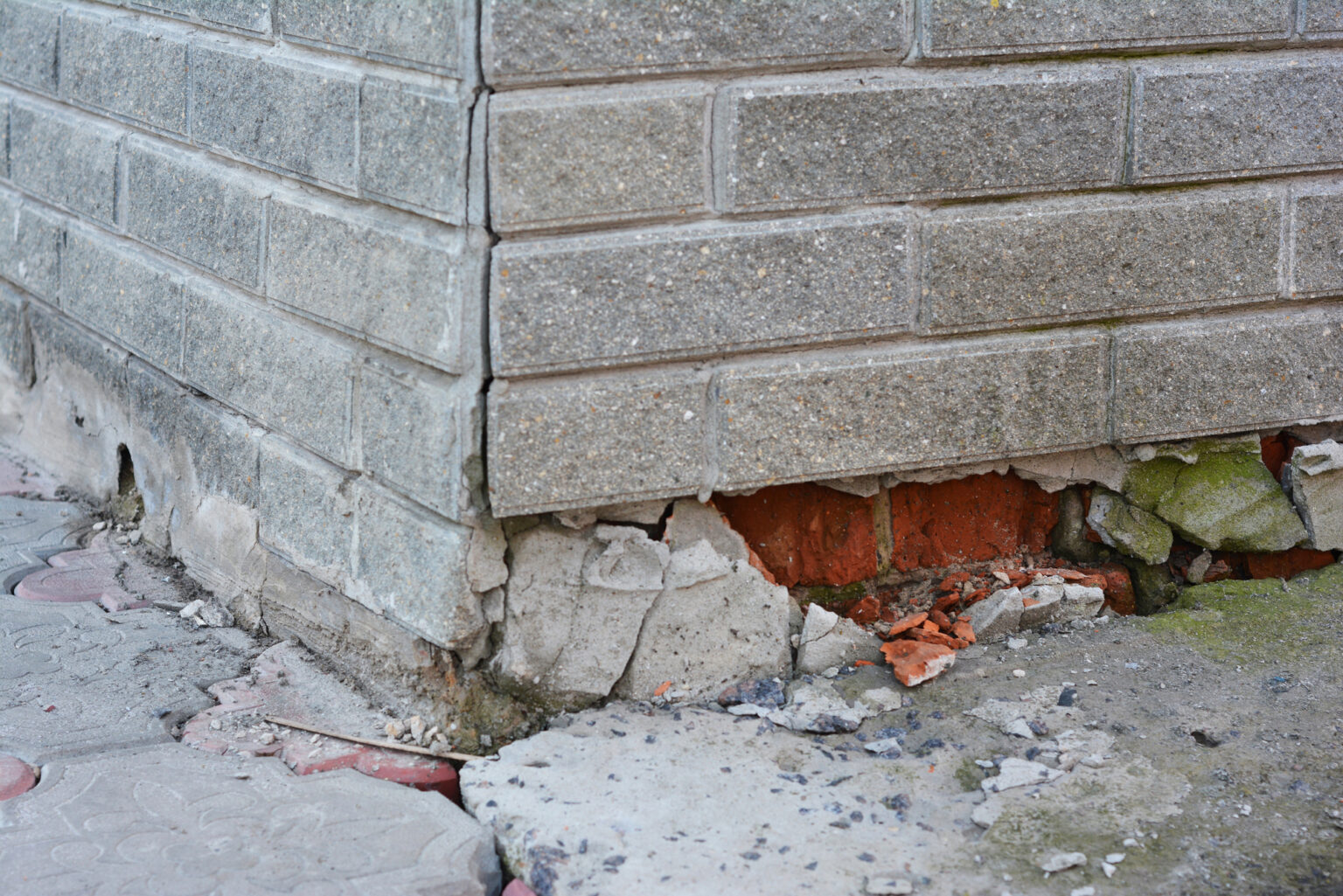
Concrete that’s crumbling, flaking, or shedding powder (efflorescence) is losing strength. This can happen when water seeps in and reacts with minerals in the wall, or when freeze-thaw cycles break down the surface. Over time, this weakens the wall and makes it more vulnerable to cracks and movement.
If you’ve patched cracks, installed braces, or tried other fixes and the problems keep coming back, it’s a sign that the underlying issue hasn’t been solved. Repeated repairs that fail to last usually mean it’s time for a professional assessment and possibly a more permanent solution.